Theatre in Criminal Justice Providing a new kind of language…
Over the past few weeks, Odd Arts has been using theatre to communicate more powerfully and effectively on both a systemic and personal level within the criminal justice system.
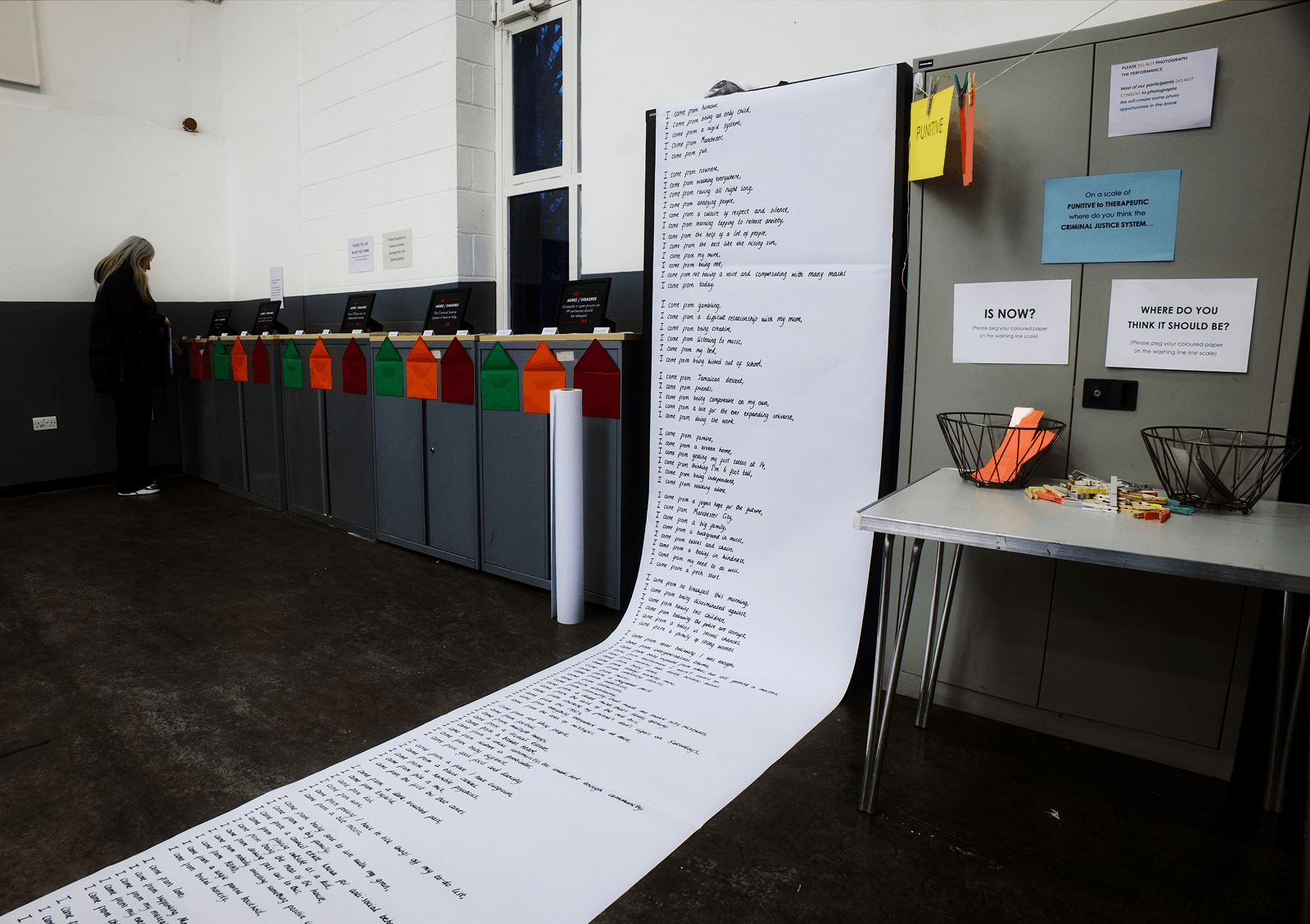
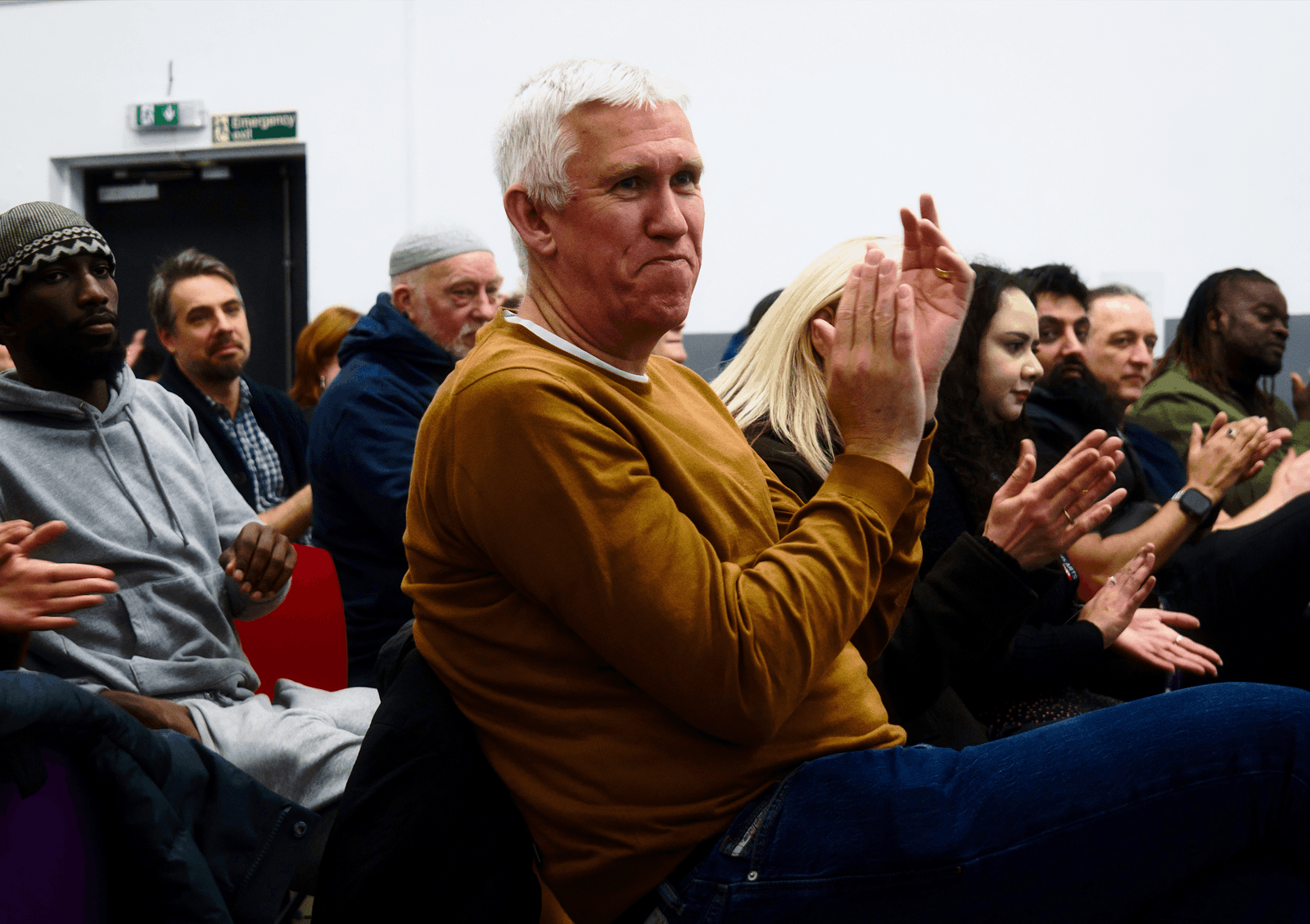
On International Human Rights Day we shared our final performance of *INSIDE & OUT* — a legislative theatre piece co-created with men who have experience of the CJS, exploring belonging, safety and justice in our city.
Together we WATCHED, ACTED, PROPOSED & VOTED — turning lived experience into real policy ideas for change.
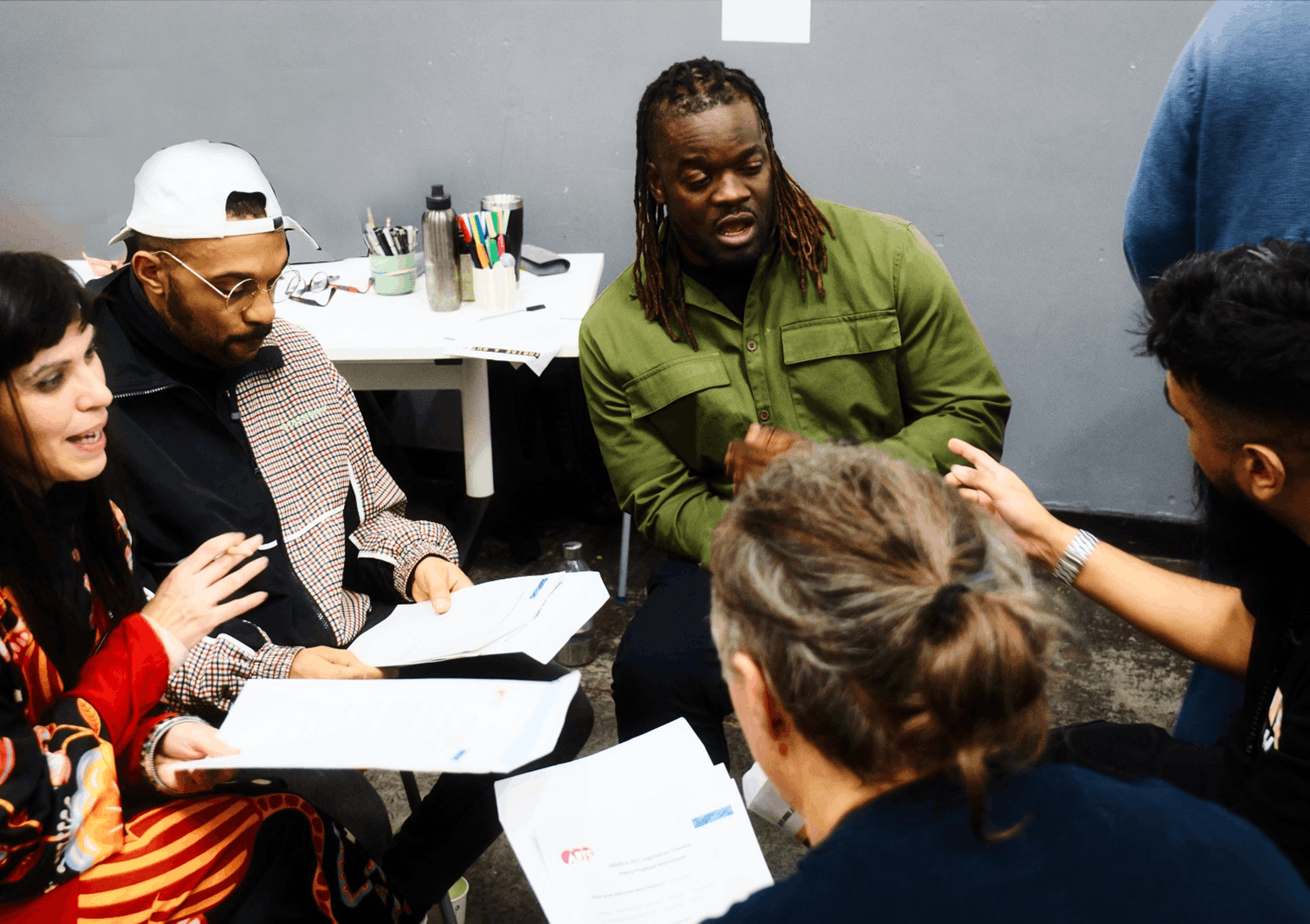
We worked with 24 men from different cultures and backgrounds across Manchester, working in both Prisons and Probation. We delivered creative sessions with the men, exploring barriers to feeling a sense of safety, belonging and community in our city whilst in turn building a better understanding and resilience of themselves and others through creativity.
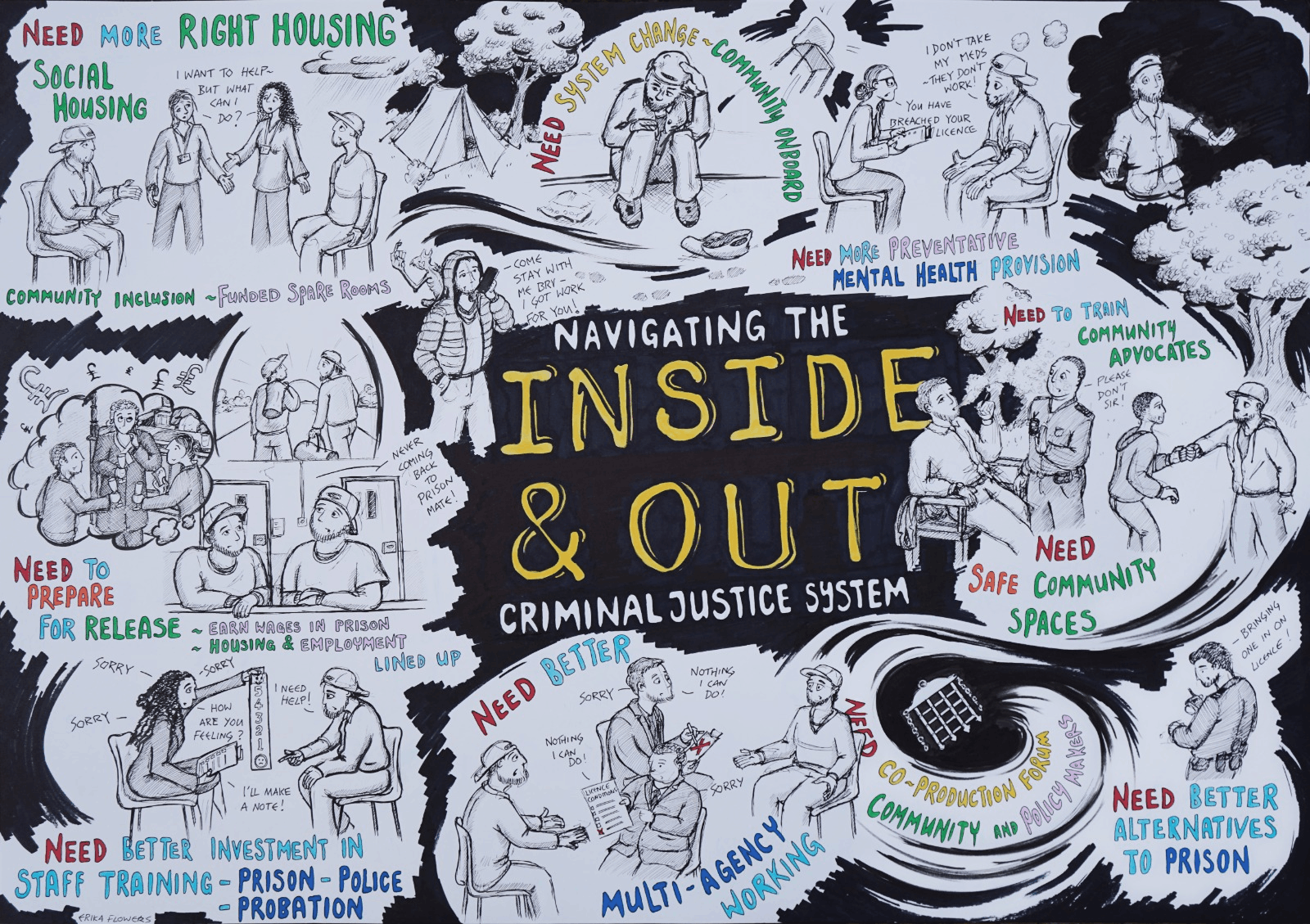
Many of the barriers explored linked to much bigger experiences and systems including housing, mental health and the criminal justice system on the whole. Specific challenges included inconsistent and harmful prison recall; being released from prison into homelessness; lack of mental health support; lack of trauma-informed responses from services and individuals working in the system; structural bias relating to class and race; limited community alternatives to prison; and limited lived-experience representation within frontline roles, resulting in gaps in empathy and understanding. These systemic issues were then developed into a legislative theatre piece.
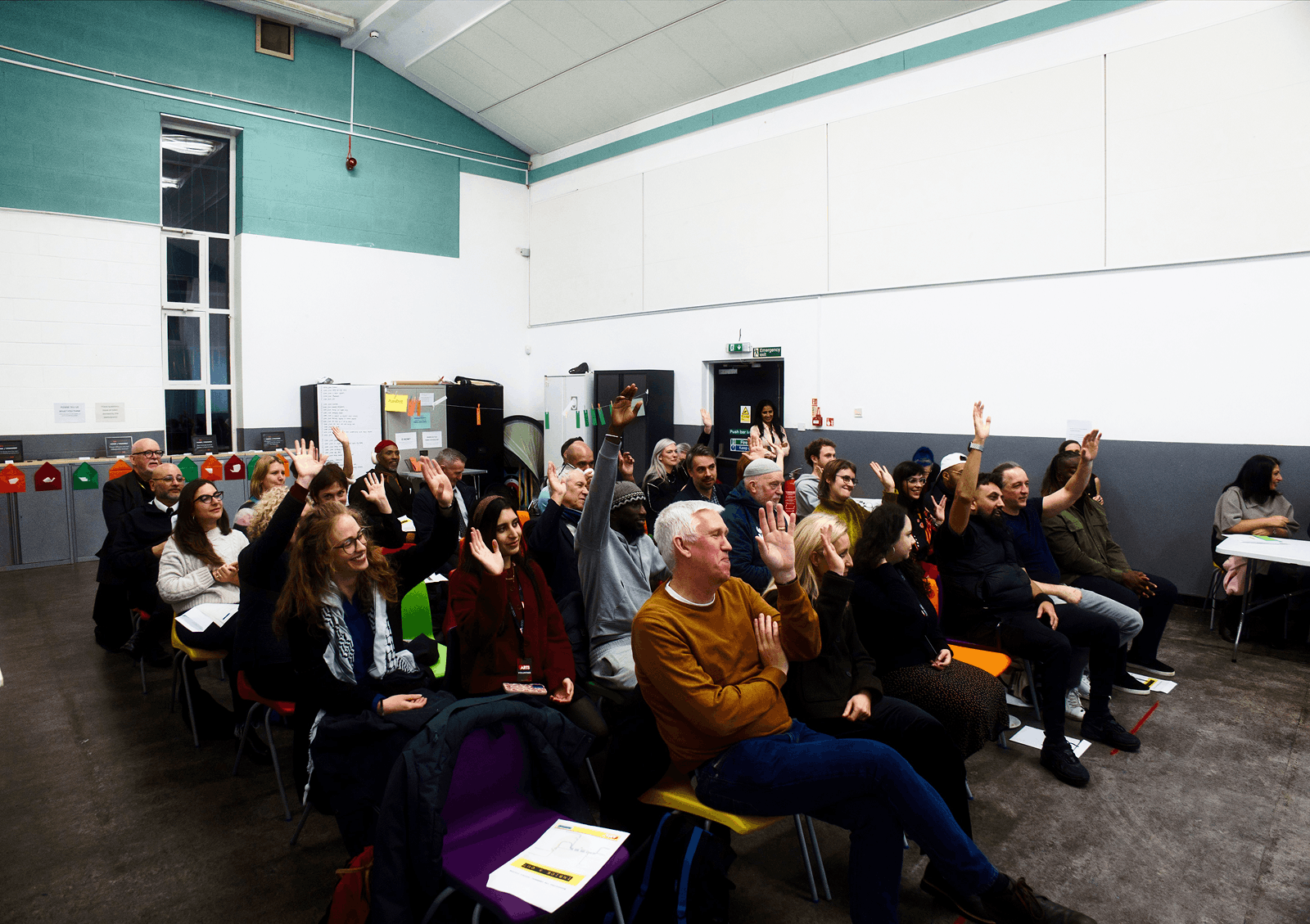
We brought together people from communities, policy-teams, the council, charities, the arts, and the criminal justice system, all working together to explore how we can create better equity for people facing complex issues.
We WATCHED the play, people stepped in and ACTED out their ideas for solutions and system change, PROPOSED ideas and policy changes & VOTED for their favourites, holding key decision makers to account to bring about change in the chosen areas.
The play offered a powerful starting point for discussions about how systems can be redesigned to promote safety, fairness and effective support.
We held our first policy team meeting on Thur 5th February and are excited to share the tangible actions we will be taking forward very soon within Greater Manchester. Legislative theatre is an excellent way to truly shift-power, value lived-experience and influence policy and a new way of communicating some of the most complex systemic challenges faced by the sector.
“By giving voice and space to these issues that are not normally amplified, or brought together in such a generous, unpatronising and informed way was fantastic”
“The live policy making was brilliant’
“To see a room of people who actually cared and were all there because they were invested to make change, and to see that our voices as people with lived experience were valid, I had to go and have a little cry to be honest”
“I feel like these workshops are giving me permission to be a version of myself, away from my offence. It feels I am able to separate and celebrate those different parts of myself”
“These workshops have made me realise I am more than the labels society has given me, it has been involving, inclusive and thoughtful.”
“These workshops are very good at helping you think differently, excellent in fact, liberating and empowering to help us stabilise our place in the world post probation life”
This project was funded by RADEQUAL: Challenge – Connect – Champion
PHOTOS by @splittheatom
The visual minutes inspired by the conversations, connection and exchanges made within the space were created by ERIKA FLOWERS
Artwork by @recordedinart
Meanwhile, Odd Arts was also using theatre to communicate on a much more individual scale. In January we delivered Wellbeing Your Way (https://oddarts.co.uk/wellbeing-your-way/) at HMP Risley. All participants completed nine hours of creative activity as part of a foreign nationals, English as a second language group. The work was delivered in a small-group setting, allowing space for trust, reflection, and meaningful engagement to develop quickly.
At the start of the week, many participants arrived visibly nervous and unsure of what to expect. Several assumed the sessions would involve visual art, and there was initial hesitation when it became clear that the work would include discussion, movement, and theatre. As the days progressed, lots of laughter was had, confidence grew, and the group became increasingly open and engaged.
The work centred on character as a way of exploring emotional needs and relationships. Rather than starting with personal disclosure, the group created two fictional characters, a father and a son, and examined the conflict between them. By identifying each character’s unmet needs, participants explored how misunderstandings and tensions could be avoided or resolved. Many reflected that the story mirrored their own lives. This distancing through character allowed participants to reflect honestly without feeling exposed.
One of the most striking moments came from a young person who, on the first day, avoided eye contact and barely spoke. By the final session, they shared openly, made eye contact, expressed their opinions clearly, and took part in performance. This shift happened over just a few days and highlighted the power of creative approaches.
Given the varied levels of English in the room, the sessions relied heavily on non-verbal approaches. Mime, physical games, and embodied storytelling ensured everyone could participate fully. Importantly, role play and performance still proved effective. Participants were able to understand complex situations through action rather than language alone, demonstrating how theatre can bridge communication barriers where traditional discussion may struggle.
Odd Arts always strives to use theatre to look at both the systemic and personal challenges in people’s lives; and when communicating in a more traditional way fails to address complex issues theatre can be a meaningful and impactful way to do this.
This article was written by Emily (Senior Project Manager for Resettlement) and Jo (Senior Project Manager for Cohesion & Equality).